Piping that won't crack — or shake itself loose.
Our piping analysis services help users control the vibration energy associated with rotating equipment piping systems to eliminate fatigue failures, downtime and repairs. We offer both on-skid and facility piping systems analysis.
Tech Transfer has extensive experience in performing piping studies for reciprocating compressor, rotating equipment, and process industry applications. Our studies are performed in accordance with applicable industry standards for both dynamic (API 618) and stress analysis (ASME B31.3, B31.8, and others).
Tech Transfer's modeling techniques reflect the continuous improvement that results from remedial field work. Our support designs ensure predicted vibrations are adequately controlled and pipe stresses fall under applicable piping code allowable stress.
- API 618 — Reciprocating Compressors
- API 674 — Reciprocating Pumps (Piping MNF & Forced Response)
- API 619 — Screw Compressors
- API 617 — Centrifugal Compressors
- API 661 — Air Cooled Heat Exchangers
- API 610 — Centrifugal Pumps
- ASME B31.3 — Process Piping
- ASME B31.8 — Gas Transmission & Distribution
- ASME Section VIII Div. 1 & 2 — Vessel Nozzle Load Analysis
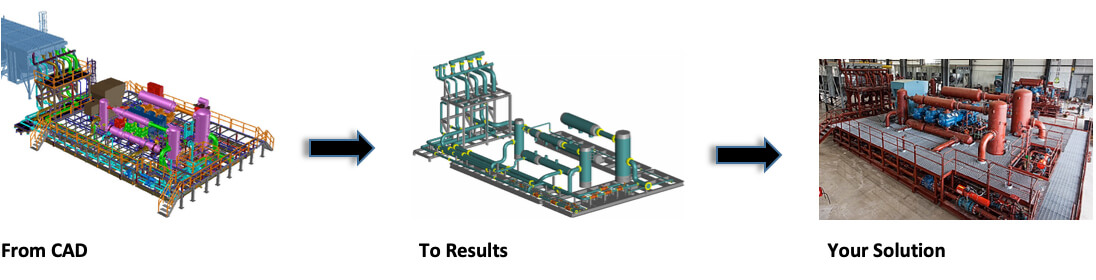
The structure beneath everything — engineered to hold.
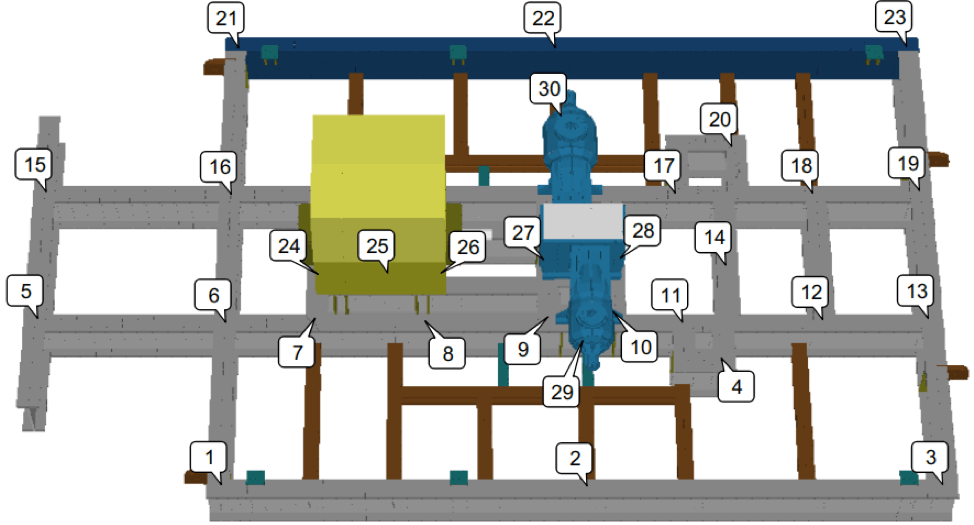
Along with vessel dynamic analysis, our skid analysis services are aimed at optimizing the design and installation of rotating equipment to improve reliability and control the effects of vibration energy that leads to fatigue failures, downtime and repairs.
Tech Transfer has the capability to perform stress and dynamic analysis for reciprocating package skids of all sizes. We have extensive experience analyzing wind, seismic, transportation and lift conditions, as well as natural frequency analysis and simulation of operating vibration levels.
Tech Transfer performs stress analysis on lifting lug designs per AISC and RP2A and provides recommendations if required, including predicted sling loads and support reaction values. We have experience analyzing FPSO compressor modules and offshore platform decks — including the ship/platform deck in the dynamic model for accuracy.
Tech Transfer has developed FEA models and modeling techniques to match field vibration results. The major equipment, skid and pedestal are modeled using 3-dimensional shell elements to achieve the highest level of accuracy, including inertial unbalanced forces, crosshead forces and cylinder gas forces based on compressor performance.
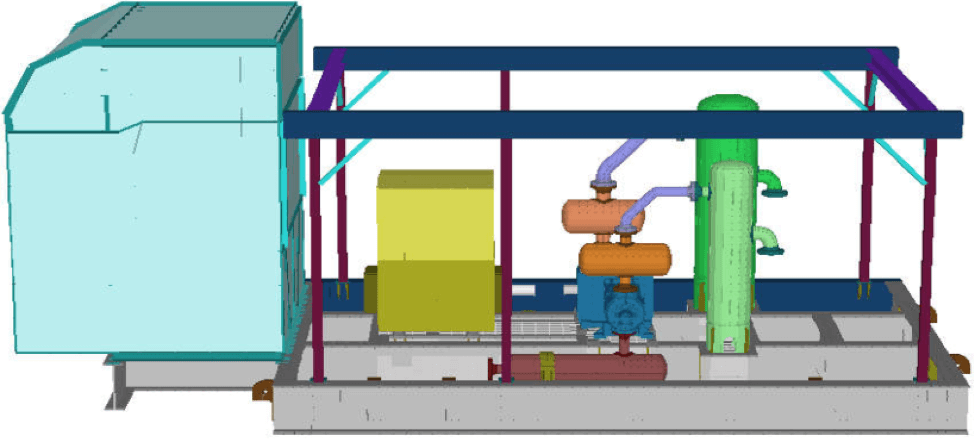
Modal analysis to keep bottles out of resonance.
Our vessel dynamic analysis services evaluate vessel mode shapes to help ensure the avoidance of mechanical resonance.
Tech Transfer has the capability to provide accurate vessel dynamic analysis per API 618 5th edition. We evaluate vessel mode shapes and ensure mechanical resonance is avoided. Forced response analysis is performed to calculate predicted vibration levels across the entire operating range of the compressor. When necessary, recommended modifications are provided in a timely manner.
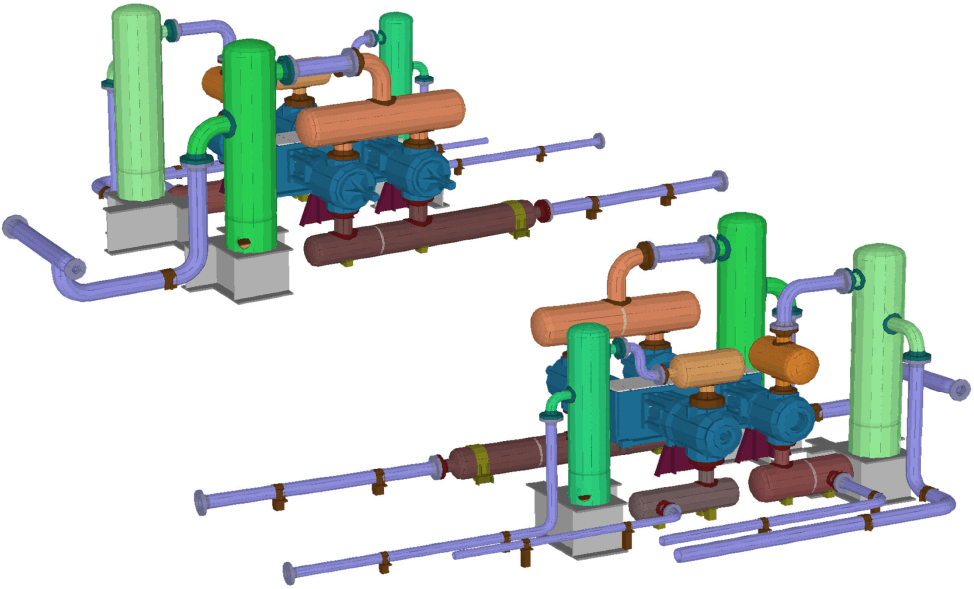
Based on extensive field experience, our FEA models include the compressor frame, cylinders, pulsation bottles, scrubbers and piping — modeled using 3-dimensional shell elements to achieve the highest level of accuracy. Tech Transfer calculates inertial unbalanced forces, crosshead forces and cylinder gas forces based on compressor performance.
- Vessel mode shape evaluation per API 618 5th Ed.
- Mechanical resonance avoidance confirmation
- Forced response analysis across full operating speed range
- Predicted vibration level calculations
- Modification recommendations when required
- 3D shell element FEA — frame, cylinders, bottles, scrubbers, piping
When the analysis isn't enough — we go to the machine.
On July 1, 2023, Tech Transfer expanded its field engineering capabilities by opening TTI Field Engineering, Inc.
TTI Field Engineering provides a range of engineering services that specifically cater to troubleshooting equipment operation and detecting performance issues. In addition to high-quality field vibration monitoring and analysis, new diagnostic capabilities allow us to provide a complete analytical solution for the entire package of operating equipment.
Our field vibration analysis services deliver effective vibration and pulsation data collection to identify sources of vibration energy, identify equipment issues and provide comprehensive engineered solutions that improve reliability and safe operation.
- On-site vibration and pulsation data collection
- Equipment troubleshooting and performance diagnostics
- Identification of vibration energy sources
- Comprehensive engineered corrective solutions
- Complete analytical solution for full operating package
- Improved reliability and safe operation outcomes

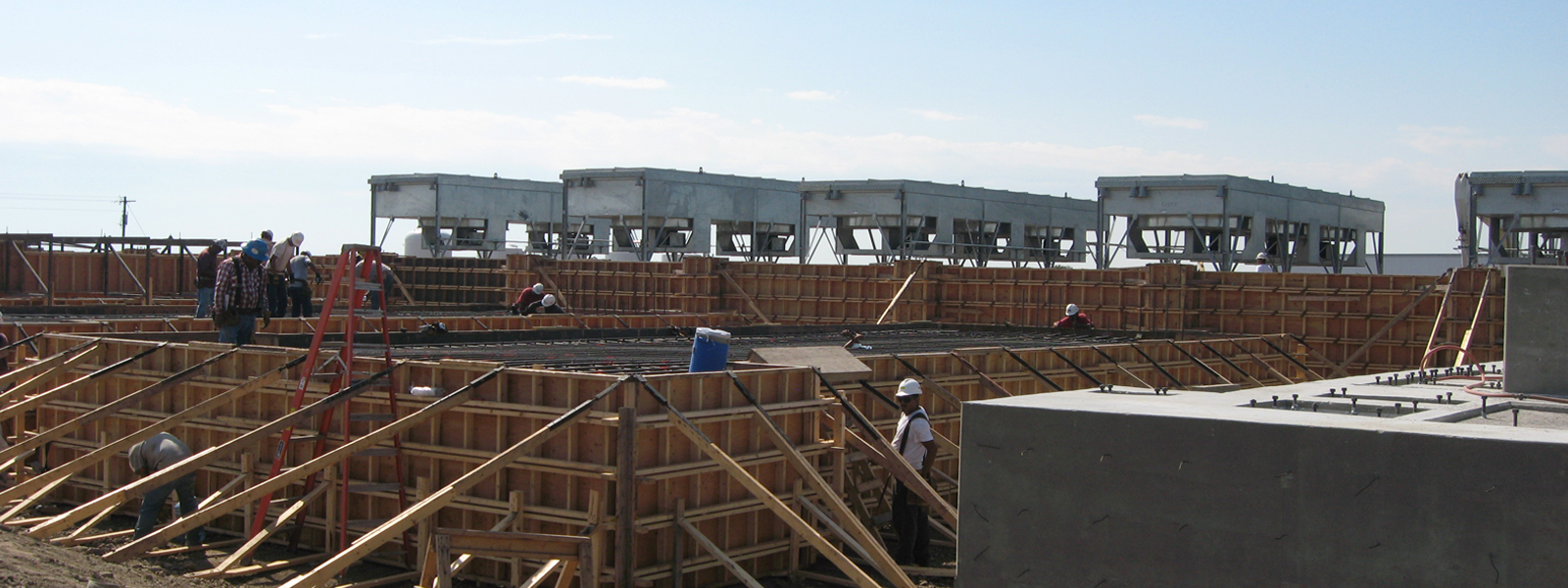
What's under the compressor matters as much as what's above it.
Our concrete foundation analysis services help in the design of foundations for a wide range of reciprocating compressor horsepower levels that ensure low stresses, effective dissipation of unbalanced forces and even settlement.
Leveraging expertise gained over the last 35 years, Tech Transfer has completed the design and analysis for some of the largest reciprocating compressors installed on concrete foundations. Tech Transfer is capable of designing foundations with pilings or drilled piers and understands the pros and cons associated with skid mounting versus block mounting compressors.
To verify the design, foundation stresses and dynamics are calculated using detailed FEA models that include concrete, rebar, anchor bolts, equipment, skids and soil properties. Our multi-layer rebar design provides energy transmission and resistance to crack propagation.
- Foundation construction drawings & bill of materials
- Piling or drilled pier design and layout
- FEA model including concrete, rebar, anchor bolts and soil
- Foundation stress and dynamics verification
- Grouting procedures & concrete specifications
- Soil preparation notes and installation comments